|
EducationWhat does the Commonwealth War Graves Commission have to offer the teacher and student of history?
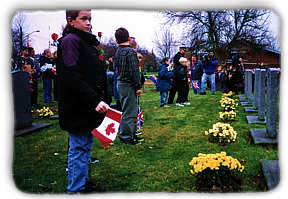
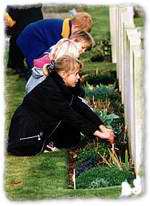
For those studying either the First or Second World War a visit to a Commonwealth war cemetery or memorial, or the use of the Commission’s records, create a far deeper and more personal understanding of the nature and pity of war than anything found in a text book. By personalising the sacrifice of those who died during the two world wars, some like John Condon were only 14 years old, it is possible to place a pupil’s thinking about interpretation and evidence into a wider and more real context. It is not the Commission’s role to tell you WHY these men and women died but we can help YOU and YOUR STUDENTS answer that question as well as WHO these people were, WHY we remember them and WHERE and HOW we commemorate them? In 1926, the Commission’s founder, Fabian Ware, said the cemeteries and memorials built and maintained by the Commonwealth War Graves Commission, "will bear a message to future generations as long as the stone of which they are constructed endures." We need your interest and help to ensure that the memory and the message endure. The Commission wants to hear from you.
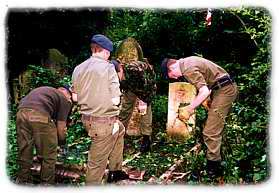
The Commission is able to trace the place of burial or commemoration for any Commonwealth serviceman or woman who died during the two world wars. These records are available to you, free of charge. The Debt of Honour Register. More complex reports, including all the casualties from a home town, regiment, poets etc. can also be provided. In addition the Commission has available a school’s video, maps and publications on some of the major cemeteries and memorials. The majority of the war dead commemorated by the Commission around the globe did not live to see their twenty-sixth birthday. To paraphrase Binyon’s lines, they had not the opportunity to grow old as we that are left grow old. Today, visitors to the Commission’s cemeteries and memorials are drawn, as they have been for eighty years, by the beauty, the silence, by the fact that someone cares. They reflect and ponder the sad truth in the epitaph "….for your tomorrow, we gave our today." The Commission is responsible for the commemoration in perpetuity of 1.7 million men and women who died during the two world wars while serving with the forces of the Commonwealth. Today, the Commission maintains war graves and memorials at some 23,000 locations and in some 150 countries and keeps detailed public records on the place of burial and commemoration for each of these casualties. While such huge numbers perhaps transcend ordinary human comprehension, the Commission personalises the sacrifice by naming each individual we remember. In the same way, we can personalise a student’s understanding of the scale of the human tragedies that were the First and Second World Wars. In commemorating the war dead, the Commonwealth War Graves Commission is committed to maintaining the highest standards at cemeteries and memorials wherever they may be located and to engaging a new generation with the commemorative heritage of the Commonwealth. Thus, will this generation come to cherish the names of those young men and women, conscious of their sacrifice and suffering in war, and sharing the same commitment to a free and peaceful world. For further information on how the Commonwealth War Graves Commission might help you please write to Education Department, or e-mail on [email protected] Community InvolvementThe Commission has had an excellent response to its initiative to foster a greater community interest and understanding of its work. In late August a meeting was held at the Commission’s Head Office at Maidenhead, attended by a cross section of interested parties, and there was general agreement that the emphasis should be on education and the involvement of young people.
A dialogue has already begun with teachers and we have received constructive criticism and comment on the material already available through the web site which we shall be taking into account in future developments. A number of schools and teachers have expressed a willingness to take part in a focus group to advise on the content of educational material and we shall be following up these offers. It has also become clear that this educational initiative can best be taken forward in partnership with other organisation such as museums and ex-service organisations who share the Commissions aims and we are seeking to work with them to develop appropriate material. In seeking to develop partnerships in this area the Commission has been greatly encouraged by the new initiative of the United Kingdom Government to strengthen the identity of veterans in the community and to ensure that their unique contribution receives the recognition it deserves through the education of the Nation. The Commission welcomes this initiative and has had discussions with the newly formed Veterans Affairs Secretariat of the Ministry of Defence on co-ordinating the development of some new "scheme of work" material for the Key Stage 3 scheme for Citizenship which will be a part of the National Curriculum from September 2003. Education MaterialFollowing recent meetings with teachers and students the Commission has begun to draft an educational pack. We would welcome the views of teachers and students on the material produced so far. How useful was it? Is it the type of support you are looking for? What can be done to enhance the material? Please note that the pack is still at a draft stage and we would hope to enhance the final version with a more advanced design and layout, including images etc. Bringing the Wars Home – War Graves on your doorstep
Bringing the Wars Home – Your local war memorial
Bringing the Wars Home – A hometown project.
|
|||||||||||||||||||
©2000-2002 The Commonwealth War Graves Commission. All Rights Reserved. Legal notices and terms of use | Contact the Webmaster |
||||||||||||||||||||